métros à montréal
toronto, you listening?

des portes
The first time I walked up to a metro station in Montreal, I essentially faceplanted into the door.
After that brief moment of confusion, I decided to pay heed to the giant yellow and black markings on the door and realized that this door effectively had no hinge— it had a single vertical axle through the middle.
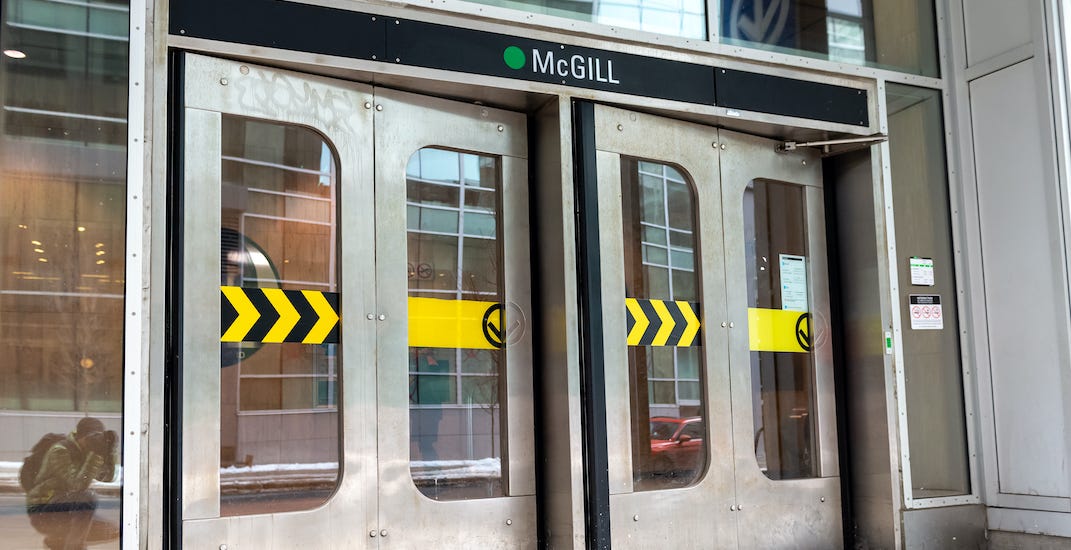
These butterfly doors marked the entrance to every metro station. It took a couple of trips for myself and my other Ontario-native friends to remark that this door was actually very efficient. The door swung open only one way, but intuitively in the “push” direction for users entering and exiting the station. The hydraulic mechanism firmly stopped it in the middle, allowing the door to rotate 90° counterclockwise. This allowed travellers going either way to comfortably pass through these doors. It’s also sleek, space-efficient, and doesn’t require a free hand!
One downfall to these doors was that they were heavier than expected— likely because the giant open stations (discussed below) and high-speed trains displacing air created a piston of sorts. Thus, breaking the pressure in this piston effect was difficult, especially with a giant metal door.
carillon de métro
My next observation put an often overlooked sense to use- my ears. Back home, the TTC is known for its pleasing and memorable door-closing chime. Here in Montreal, the chime sounded… friendlier, and less urgent.
The TTC chime was inspired by an old Avon Commercial, it consists of the notes G,-E-C played downwards in a major key. This basic triad often reminds passengers of other melodies, like the Sesame Street opening. It cuts through the clutter of noise, can be played in locations with poor acoustic quality, and has a hint of warning.
On the other hand, the Metro uses an ascending D-C-B chime that is softer and less forceful.
However, one commenter noted online that “riders in Montreal seem to have a sixth sense for when the doors are about to close, and do not usually seem to charge the doors as we see in Toronto” (Urban Toronto Forum). Why might this be?
indicateur lumineux
I couldn’t stop talking about these lights when I noticed them. The doors are adorned with led strips from top to bottom, bright enough to be seen from any angle.
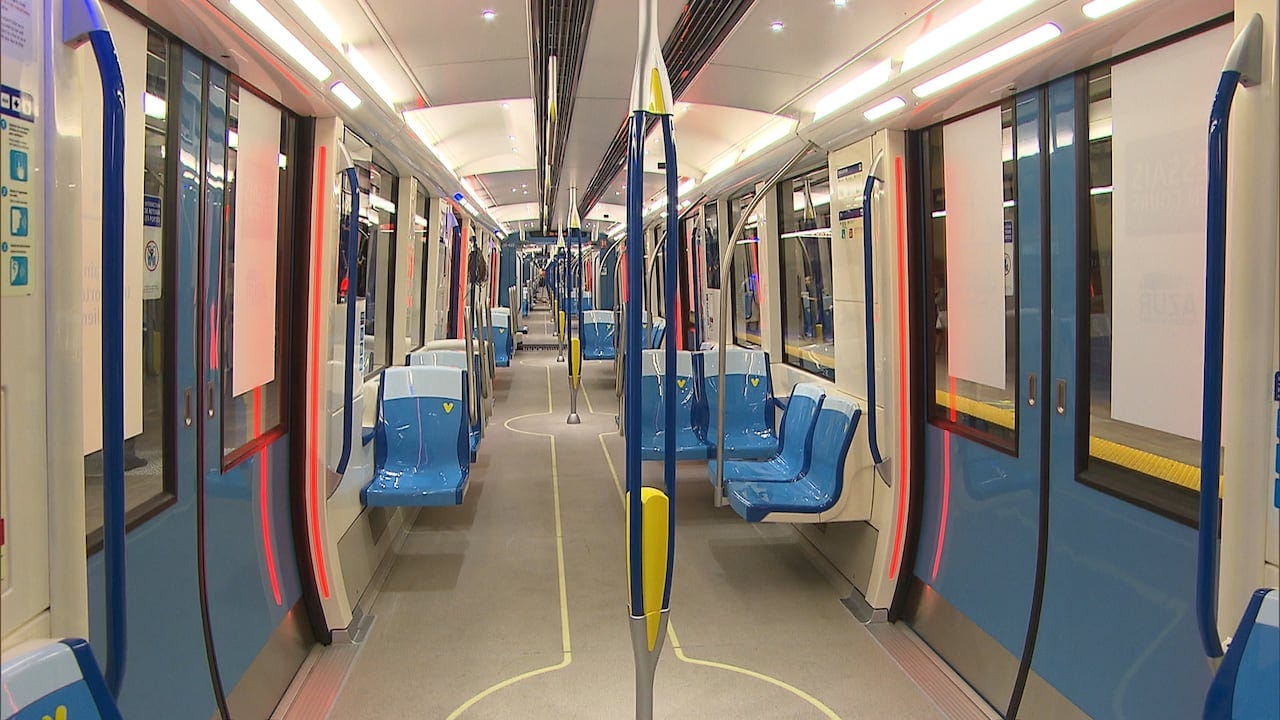
While the train is rolling, the lights are an inconspicuous white, blending in cleanly with the walls. After the train approaches a reasonable distance from the next station, the lights on the side that the doors will open turn green. This allows for two things:
Absence of a second audio announcement informing passengers which way doors will open (as heard on the TTC)
Tells a sitting or loitering passenger when to move toward the door
Likewise, a second before the chime rings out, the lights turn red, informing riders approaching the doors that the doors will close soon. How intuitive! Must be a factor in that “sixth sense” that the commenter was musing about. It’s also worth noting that the doors are wider… much easier to squeeze past grumpy morning passengers.
In conclusion? Less noise pollution, and commuters can comfortably sit back and listen to music, relax, or zone out. These universal indicators give them every piece of information they need to calmly get to their destination, even during rush hour. Montreal takes accessibility seriously!
To top it all off, the metro stations were clean and grand, much bigger than their Toronto and New York counterparts. Unique architectural pieces adorned the stations, eye-catching and aesthetically pleasing but not out of place.